

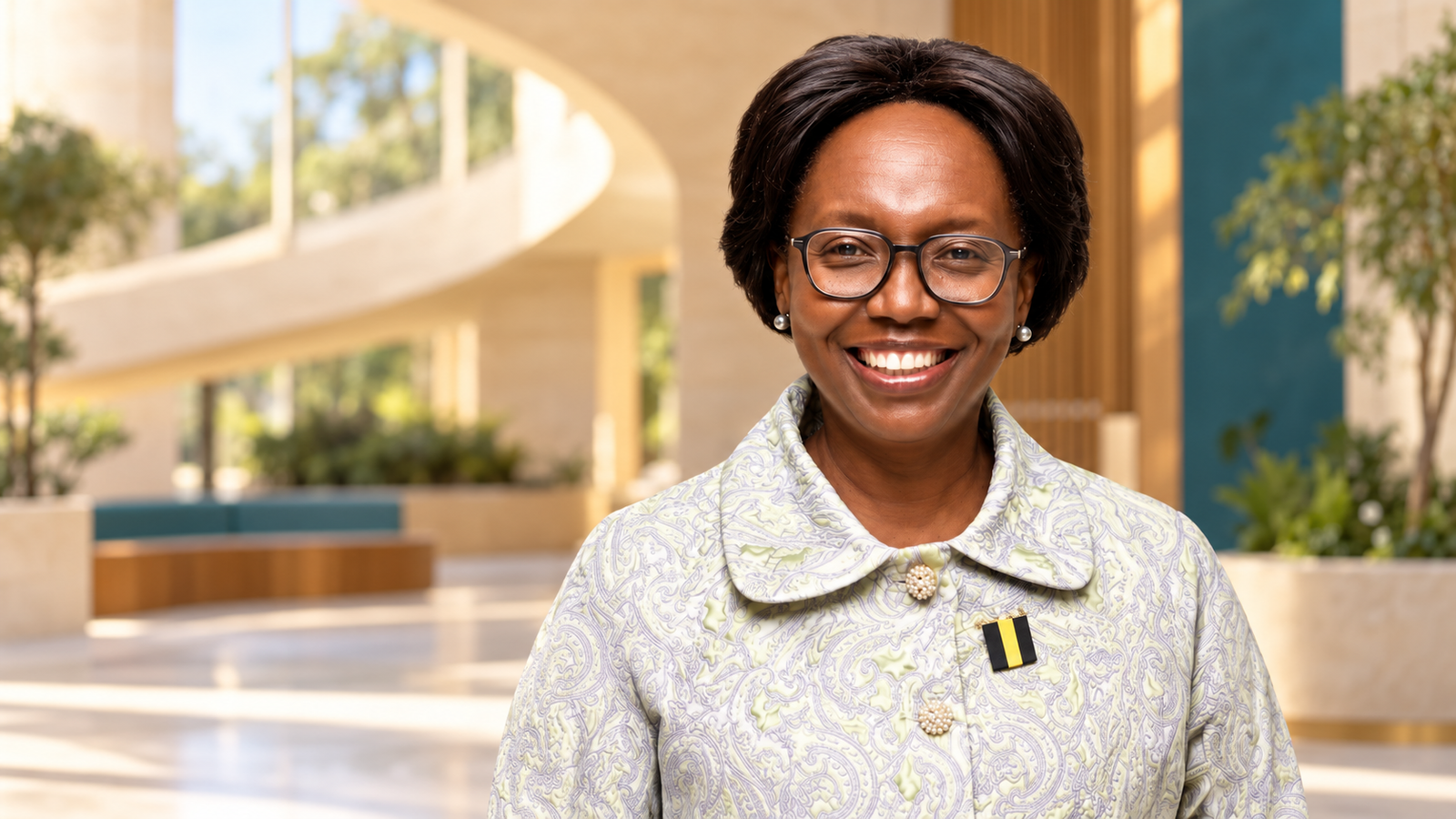
Rwanda’s health minister is combining science, technology and public service to expand access to quality healthcare and strengthen the country’s ability to confront future health challenges.
Dr. Sabin Nsanzimana has spent much of his career asking how research can improve people’s everyday lives.
As a physician, epidemiologist and public-health leader, he has worked across hospitals, national disease programmes, scientific research and government. Today, as Rwanda’s Minister of Health, he is helping turn that experience into stronger systems for patients, healthcare professionals and communities.
His leadership reflects a clear principle: meaningful healthcare transformation requires trained people, reliable information, modern facilities and the courage to prepare for challenges before they become emergencies.
A Scientist in Public Service
Before becoming health minister in November 2022, Dr. Nsanzimana led the Rwanda Biomedical Centre, the University Teaching Hospital of Butare and national programmes addressing HIV and viral hepatitis.
He holds a PhD in Epidemiology from the University of Basel and has contributed to more than 230 scientific publications, major clinical trials and international research collaborations.
This background allows him to approach public leadership from several perspectives: as a doctor concerned about individual patients, a researcher guided by evidence and an administrator responsible for building systems that serve an entire country.
Training Rwanda’s Next Health Workforce
One of the most ambitious initiatives under his leadership is Rwanda’s 4×4 Health Workforce Development Reform.
The programme seeks to quadruple the country’s production of healthcare professionals within four years. It is expanding training opportunities for doctors, nurses, midwives, pharmacists and other specialists while strengthening the institutions responsible for preparing them.
By the end of 2025, more than 16,000 new health-professional students had reportedly enrolled through the reform.
The idea is straightforward but transformative: new hospitals, equipment and technology can only improve health outcomes when enough trained professionals are available to use them.
By investing in people, Rwanda is strengthening the foundation of its healthcare system for generations to come.
Leadership During the Marburg Outbreak
Dr. Nsanzimana’s leadership was tested during Rwanda’s first Marburg virus disease outbreak in 2024.



The country responded through testing, contact tracing, isolation, public communication and vaccination for healthcare workers and other people at high risk. The outbreak resulted in 66 confirmed cases, with 51 patients recovering.
Rwanda’s response demonstrated the importance of preparation, scientific cooperation and keeping the public informed.
It also showed why strong health systems matter beyond national borders. An outbreak contained quickly protects neighbouring countries and contributes to the health security of the entire East African region.
Using Technology to Make Better Decisions
Dr. Nsanzimana has also supported the use of technology and real-time information in healthcare leadership.
In April 2025, Rwanda launched its Health Intelligence Center, a national platform designed to collect, process and analyze health information. The system helps decision-makers identify changing patterns, direct resources and respond more rapidly when new concerns emerge.
For patients, the technology behind a health system may be invisible. Its impact, however, can be deeply personal: faster responses, better planning and resources reaching the places where they are needed most.
Protecting Women Through Prevention
Another major priority is Rwanda’s campaign to eliminate cervical cancer as a public-health problem.
Through Mission 2027, the country is expanding screening, prevention, early diagnosis and treatment. The initiative seeks to reach approximately 1.3 million women.
The programme represents a shift from waiting until cancer becomes advanced to identifying risks earlier and giving women a greater chance of receiving effective care.
It also reflects Dr. Nsanzimana’s wider leadership philosophy: prevention should be treated as an essential investment rather than an afterthought.
Building More of What Africa Needs
Rwanda is also working to reduce its dependence on imported medical supplies.
Dr. Nsanzimana has supported local production initiatives, including vaccine-manufacturing ambitions and an auto-disable syringe facility in Rwamagana. In July 2026, he and Gates Foundation Chair Bill Gates visited the area to examine how manufacturing, frontline healthcare and international partnerships can support one another.
Such investments can create skilled employment while making essential health products more readily available within Rwanda and the wider region.
A Healthier Future Built Through Systems
Dr. Sabin Nsanzimana’s story is not defined by one programme or accomplishment.
His impact can be seen in the students preparing to become healthcare professionals, the information helping officials make faster decisions, the women receiving cancer screening and the medical products increasingly being manufactured closer to the people who need them.
At Africa Spotlights, we recognize African leaders whose work carries lessons and possibilities across borders.
Dr. Nsanzimana represents a new generation of evidence-driven public leadership—one that uses science not merely to understand society’s challenges, but to build practical systems capable of solving them.